
Hair Loss Oil: How to Reduce Hair Fall and Support Hair Growth
Hair fall can be frustrating, especially when your hair starts looking thinner, weaker, or less manageable. While changing your shampoo or improving your hair-care routine may help, many people also consider using a hair loss oil to nourish their scalp and maintain healthier-looking hair.
But can hair oil actually reduce hair fall? The answer depends on what is causing the problem. A suitable oil can condition dry strands, reduce friction, and help minimize breakage. However, it cannot guarantee new hair growth or treat every cause of hair loss.
If you prefer botanical hair care, understanding the ingredients, choosing the right formulation, and using it consistently can help you make better decisions for your hair.
To know more about hair loss oil and how to reduce hair fall and support hair growth, read more.
What Is Hair Loss Oil and How Does It Work?
A hair oil formulated for hair fall is designed to condition the scalp and hair while supporting a regular hair-care routine. Depending on its ingredients, it may help improve softness, reduce dryness, and make fragile strands easier to manage.
However, hair fall and hair breakage are two different concerns.
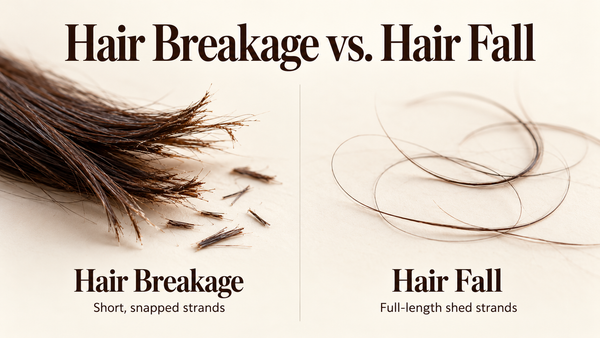
Hair shedding occurs when strands fall out from the scalp, often as part of the natural hair growth cycle. Hair breakage happens when the hair shaft becomes damaged and snaps before reaching its full length.
A suitable hair loss oil may help address dryness and breakage, but it should not be considered a universal treatment for excessive shedding.
Genetics, hormonal changes, nutritional deficiencies, stress, illness, and scalp conditions can all contribute to hair loss. Identifying the underlying cause is important, particularly when thinning is persistent or sudden.
What Are the Benefits of Using Hair Loss Oil?
When selected according to your hair type and used appropriately, hair oil can provide several practical benefits.
1. Helps Condition Dry and Brittle Hair
Dry hair can feel rough, become tangled easily, and break during brushing or styling. Certain oils help condition the hair shaft, improving softness and manageability.
This can be particularly useful if you regularly use heated styling tools, wash your hair frequently, or expose it to environmental stress.
2. May Help Reduce Hair Breakage
By improving lubrication and reducing friction, a suitable oil may help protect fragile strands from some forms of mechanical damage.
Less breakage can also help you retain more of your natural hair length. However, this does not mean the oil necessarily stops hair shedding at the follicle.
3. Improves Hair Softness and Manageability
Conditioned hair is generally easier to comb and style. Depending on the formulation, an oil may also help reduce the appearance of frizz and add natural-looking shine.
These cosmetic benefits can make hair look healthier without changing its natural density.
4. Supports a Consistent Hair-Care Routine
A regular oiling routine can complement gentle washing, conditioning, and careful styling. The important thing is to use a product that suits your scalp rather than applying excessive amounts in the hope of getting faster results.
How to Choose the Right Organic Hair Oil
Choosing an organic hair oil involves more than looking for a natural label. The ingredients, formulation, and suitability for your scalp are equally important.
Here are a few factors to consider before purchasing.
-
Check the Ingredients
-
Choose According to Your Scalp Type
-
Avoid Unrealistic Growth Claims

Is Hair Oil for Dry Hair Different From Hair Loss Oil?
Although these products may overlap, their intended purposes can differ.
A hair oil for dry hair primarily focuses on conditioning rough strands, improving softness, and helping reduce friction. A product marketed for hair loss may instead emphasize scalp care or ingredients traditionally associated with hair growth.
If your hair looks thinner because the strands are breaking, conditioning may help improve its appearance and length retention. However, if you are experiencing excessive shedding from the scalp, dryness may not be the underlying cause.
For dry or damaged hair, consider the following practices alongside oiling:
-
Use a suitable conditioner after washing.
-
Limit excessive heat styling and use a dedicated heat protectant when needed.
-
Brush gently, particularly when hair is wet and more vulnerable to damage.
-
Apply oil in moderate amounts rather than saturating the scalp.
-
Adjust your routine according to your hair texture and scalp condition.
What Should You Look for in a Hair Care Oil?
When comparing hair-care products, consider the entire formulation rather than focusing on a single trending ingredient.
A suitable hair care oil should have a clear ingredient list, understandable directions, and a texture that works for your hair type.
Consider whether you need more conditioning for dry lengths, a lighter application for a naturally oily scalp, or a product that fits comfortably into your weekly routine.
Can Hair Loss Oil Support Hair Growth?
Hair growth depends on the activity of hair follicles and the natural growth cycle. Hair oil does not automatically stimulate new growth simply because it contains botanical ingredients.
However, conditioning can help protect existing strands from excessive dryness and breakage.. When less length is lost through breakage, hair may appear fuller and become easier to grow out. Also, regular or routine usage decreases the chances of hair fall significantly
If you notice sudden shedding, persistent thinning, bald patches, or scalp discomfort, consult a dermatologist. Depending on the cause, you may need treatment beyond cosmetic hair care.
Why Consider Maya Hair Oil?
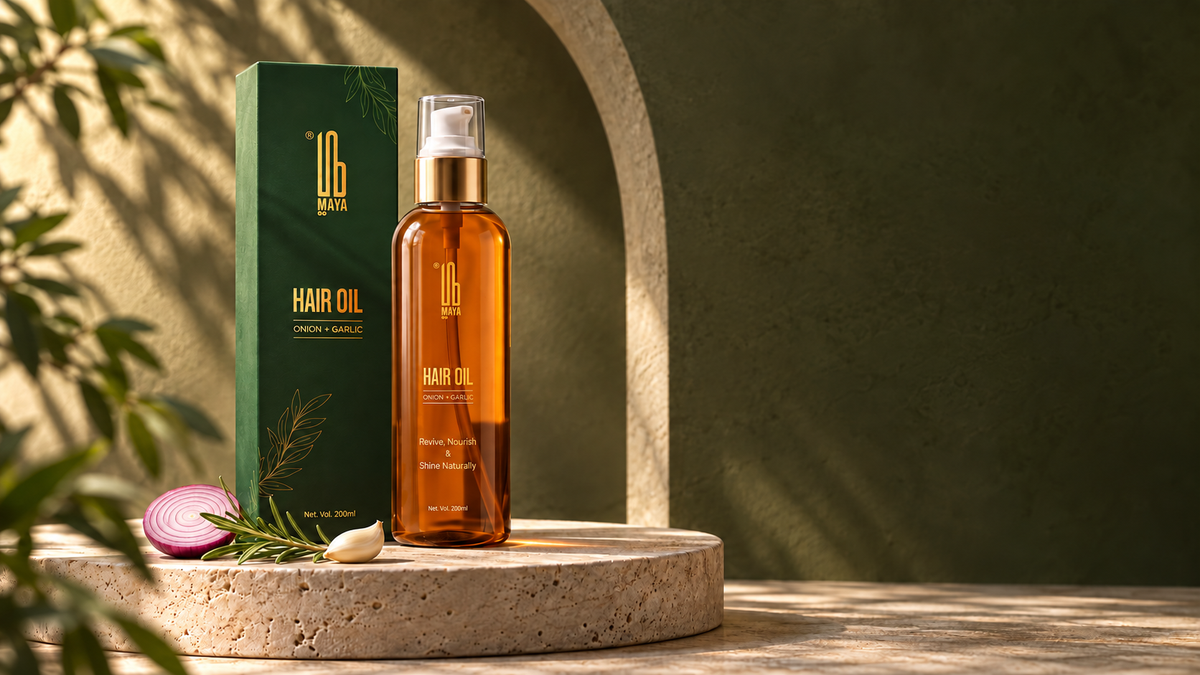
For people who prefer botanical ingredients, Maya Hair Oil offers a blend of onion, garlic, aloe vera, fenugreek seeds, rosemary leaves, and coconut oil.
The formulation brings together ingredients traditionally used in hair care and conditioning oils. It is designed to support a regular routine focused on nourishing the scalp, conditioning the strands, and maintaining softer, smoother, healthier-looking hair.
Maya Hair Oil is also a practical option to explore if you want to incorporate a botanical blend into your existing hair-care routine. As with any cosmetic product, individual experiences can vary, and it should not be treated as a guaranteed treatment for medical hair loss.
If you are comparing products, you can explore Maya's hair oil for hair growth in UAE to learn more about its formulation, ingredients, and recommended use.
How to Use Hair Oil as Part of Your Routine
-
Start with a moderate amount
-
Massage gently
-
Follow the product directions
-
Wash thoroughly
-
Be consistent

Final Thoughts
Choosing the right hair loss oil starts with understanding your hair and scalp. A suitable formulation can condition dry strands, improve manageability, and help minimize breakage. These benefits may help your hair look healthier and allow you to retain more length.
However, hair oil cannot guarantee regrowth or treat every cause of hair loss. Pay attention to ingredients, avoid unrealistic claims, and seek professional advice if shedding is persistent or worsening.
With a suitable product and a consistent routine, you can make more informed choices about caring for your hair without expecting a single oil to do everything.
FAQs
Can hair loss oil stop hair fall permanently?
No hair oil can guarantee permanent results. It may help reduce breakage, but persistent shedding can have underlying causes that require professional assessment.
Which ingredients should I look for in a hair loss oil?
Consider ingredients suited to your hair and scalp, such as coconut oil for conditioning or botanical ingredients commonly used in hair care. No ingredient guarantees regrowth.
Can organic hair oil help with dry, damaged hair?
Yes, a suitable botanical oil may help condition dry strands, improve softness, and reduce friction. Results depend on the formulation and your hair type.
How often should I use hair loss oil?
Frequency depends on your scalp condition, hair type, and product instructions. Start with a manageable routine and adjust according to how your hair responds.
Related reads
Hair Breakage vs. Hair Fall: Key Differences and What to Do
Learn the difference between hair breakage and hair fall, understand their common causes, and discover practical...
Read more →
Best Natural Hair Oil for Dry and Damaged Hair in UAE
Discover how to choose the best natural hair oil for dry and damaged hair in the...
Read more →
Natural Hair Oil in UAE: How to Choose the Right Herbal Blend
Choosing natural hair oil in the UAE starts with understanding your hair type, scalp needs, and...
Read more →